Sri Dalada Maligawa | The Temple of the Sacred Tooth Relic
Kandy, Srilanka
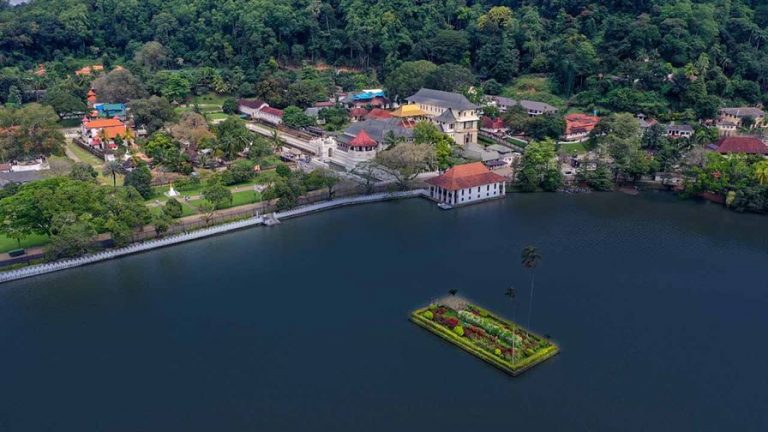
The Temple of the Sacred Tooth Relic (Sri Dalada Maligawa) in Kandy, Sri Lanka, is one of the most revered places of worship in the Buddhist world. It enshrines the left tooth relic of Gautama Buddha, drawing thousands of local and international devotees and tourists daily. Recognizing its religious, historical, and cultural importance, UNESCO designated the temple as a World Heritage Site in 1988.
Historical and Religious Significance
The sacred tooth relic was brought to Sri Lanka from the ancient Indian kingdom of Kalinga by Princess Hemamala and Prince Dantha during the reign of King Keerthi Sri Meghavarna (Kithsirimevan, 301–328 AD). From then on, it became a symbol of royal authority and legitimacy. Wherever the capital of the country moved, the relic was safeguarded within a specially built shrine in the royal palace. The remnants of these ancient shrines can still be seen in cities like Anuradhapura, Polonnaruwa, Dambadeniya, Yapahuwa, Kurunegala, Kotte, and Gampola.
Kandy became the final home of the Sacred Relic and continues to be its most venerated site.
Architectural Marvel
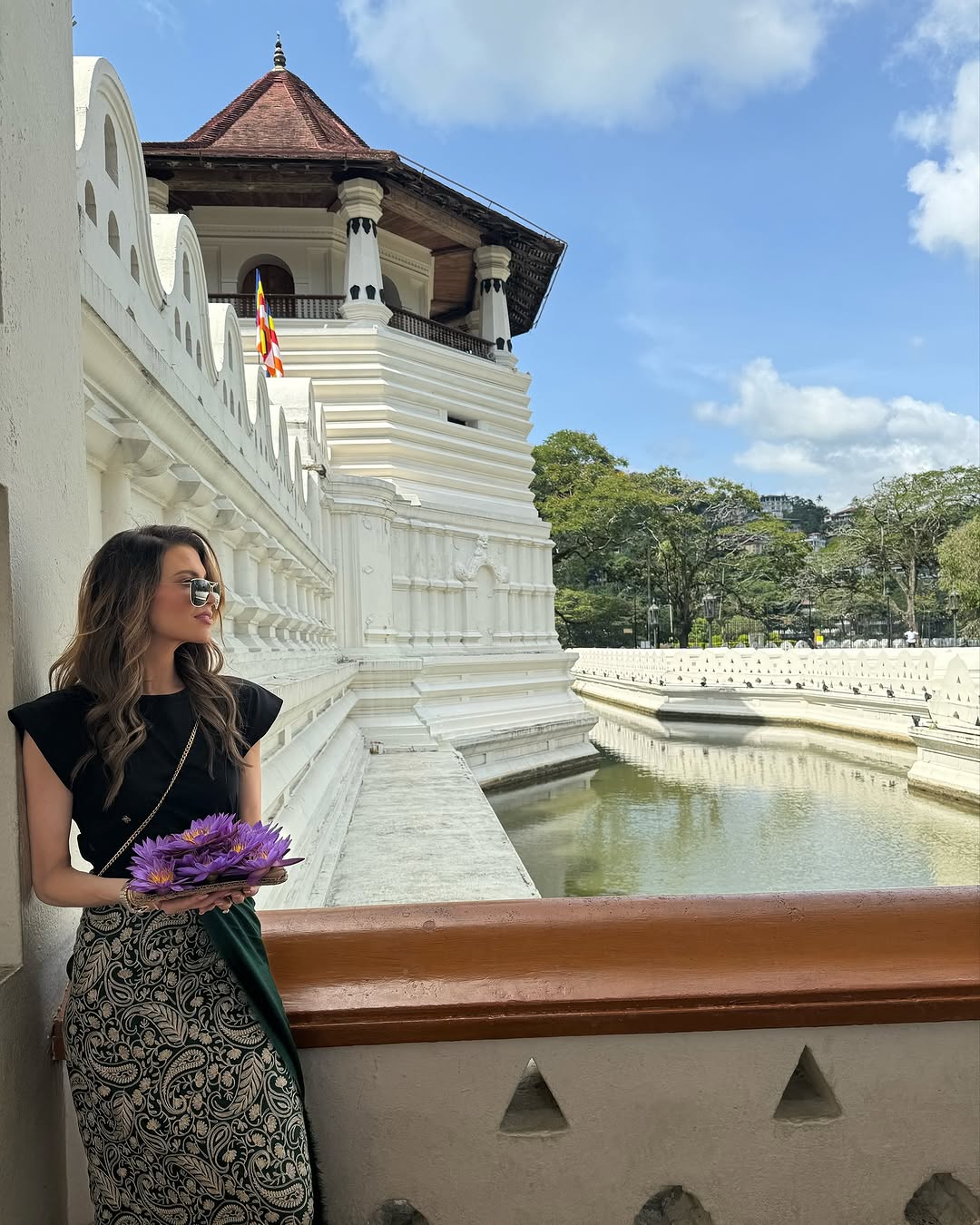
The temple reflects unique Kandyan architecture, blended with the traditional styles of earlier Dalada Mandira (shrines of the Sacred Relic). Situated in a picturesque setting:
-
North: The ancient Royal Palace
-
East: The forest reserve Udawaththa Kelaya
-
South: The serene Kandy Lake (Kiri Muhuda)
-
West: The Natha and Paththini Devala shrines
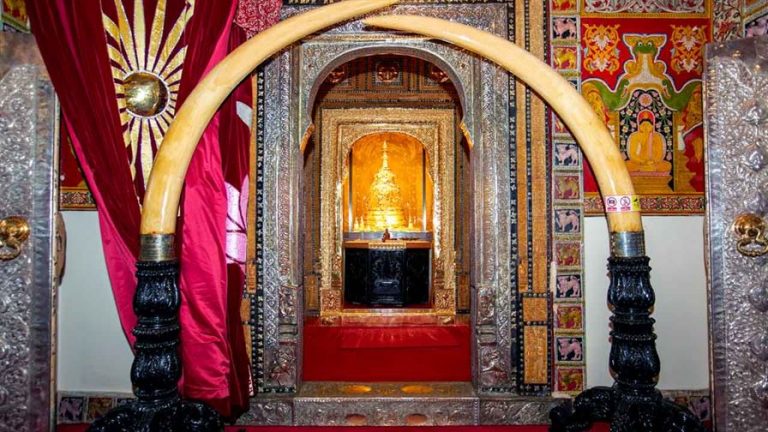
Adorned with intricate carvings in gold, silver, bronze, and ivory, the temple stands as a symbol of artistic excellence.
Evolution Through Time
-
King Wimaladharmasuriya I (1592–1604): Built the first Dalada Madura in Kandy
-
Destroyed by the Portuguese
-
King Rajasinghe II (1635–1687): Rebuilt it; later burnt by the Dutch
-
King Wimaladharmasuriya II (1687): Built a three-storey temple; later deteriorated
-
King Sri Veera Parakrama Narendrasinghe (1707–1739): Constructed the two-storey temple seen today
-
South Indian Nayakkar Kings: Renovated and protected the shrine
-
King Keerthi Sri Rajasinghe: Beautified the temple to its present state
-
King Sri Wickrama Rajasinghe (1798–1815): Added the Paththirippuwa (Octagonal Pavilion)
Rituals and Custodianship
The daily rituals and protection of the Sacred Tooth Relic are carried out without interruption. These sacred duties are overseen by the Mahanayake Theros of the Malwatta and Asgiriya Chapters, along with the Diyawadana Nilame, the lay custodian of the relic.
Places to Visit Within the Temple Complex
Visitors to the Temple of the Sacred Tooth Relic can explore several sacred and historical locations within the temple grounds, including:
-
Mahamaluwa (Esplanade)
-
Moonstone Entrance
-
Paththirippuwa (Octagon)
-
Golden Canopy
-
The Dragon Arch
-
Ambarawa (Tunnel)
-
Drumming Hall
-
Handunkudama
-
Patamalaya
-
Magul Maduwa (Audience Hall)
-
The King's Palace
-
Queen’s Bathing Pavilion
-
New Shrine Room
-
Workshop of Golden Weapon
-
International Buddhist Museum
-
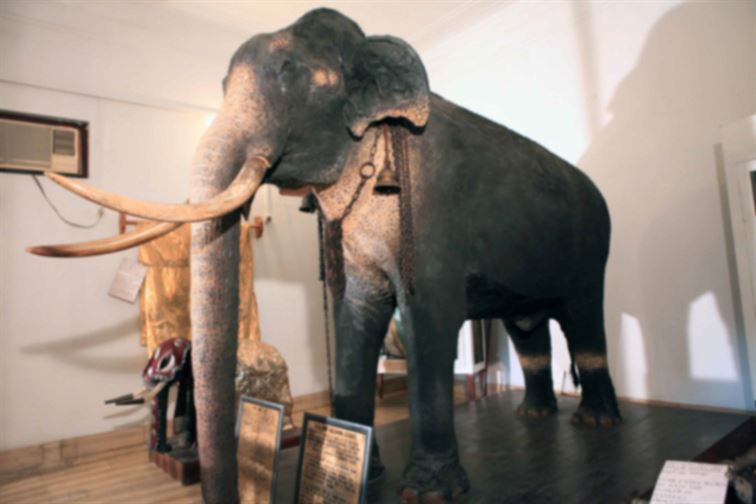
Museum of Raja Tusker
Each of these sites holds historical, architectural, or religious significance and provides a deeper understanding of the temple's role as both a spiritual center and a national treasure.
Our Gallery
Tourism & Traveling Gallery.
_paintings.jpg)
.jpg)